
Ranchi, Jharkhand | 26 August 2026
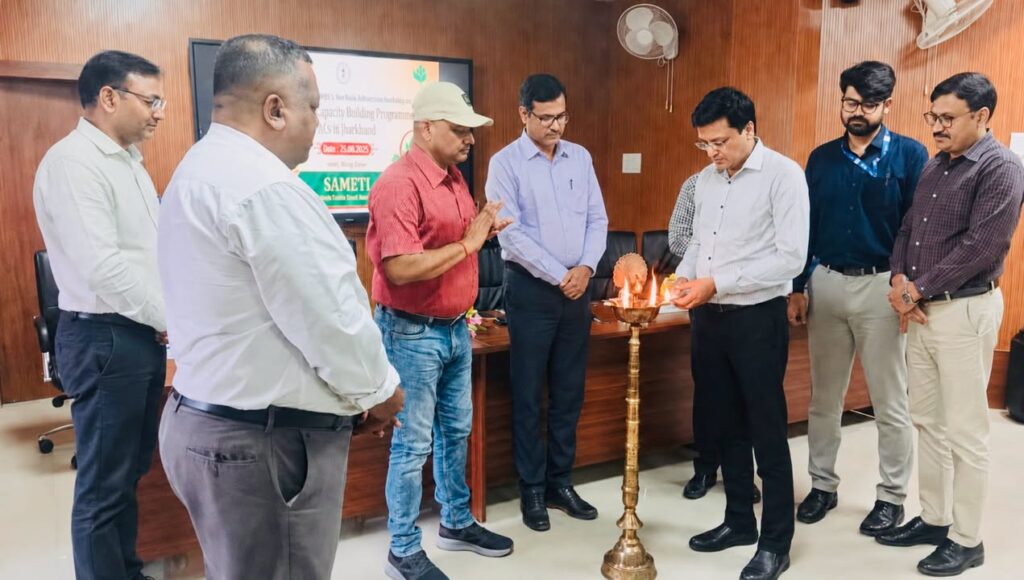
It was a proud moment for Sansar Green as its Founder & Managing Director, Mr. Rajeev Singh, jointly inaugurated the agricultural export workshop with the Director of Agriculture, Jharkhand, and the Director of SAMETI, Jharkhand, at Krishi Bhavan, SAMETI, Ranchi.
During the programme, Mr. Rajeev Singh presented the “Jharkhand Agriculture Export Roadmap 2030”, outlining a practical strategy to connect Jharkhand’s farmers and Farmer Producer Organisations with national and global markets.
The roadmap focused on identifying district-specific agricultural products, strengthening FPOs, improving quality standards, developing processing and packaging infrastructure, building cold-chain and storage facilities, and creating stronger market and export linkages.
The workshop, organised with the participation of SAMETI and APEDA, brought together Farmer Producer Organisations, agricultural officials and sector experts from across Jharkhand.
Mr. Singh highlighted the strong export potential of products such as potato, tamarind, mahua, mango, jackfruit, turmeric, chilli, tomato and other traditional agricultural produce of Jharkhand.
He emphasised that increasing production alone is not enough. Farmers and FPOs must also focus on quality certification, grading, processing, modern packaging, scientific storage, traceability and efficient supply chainsto compete in organised and international markets.
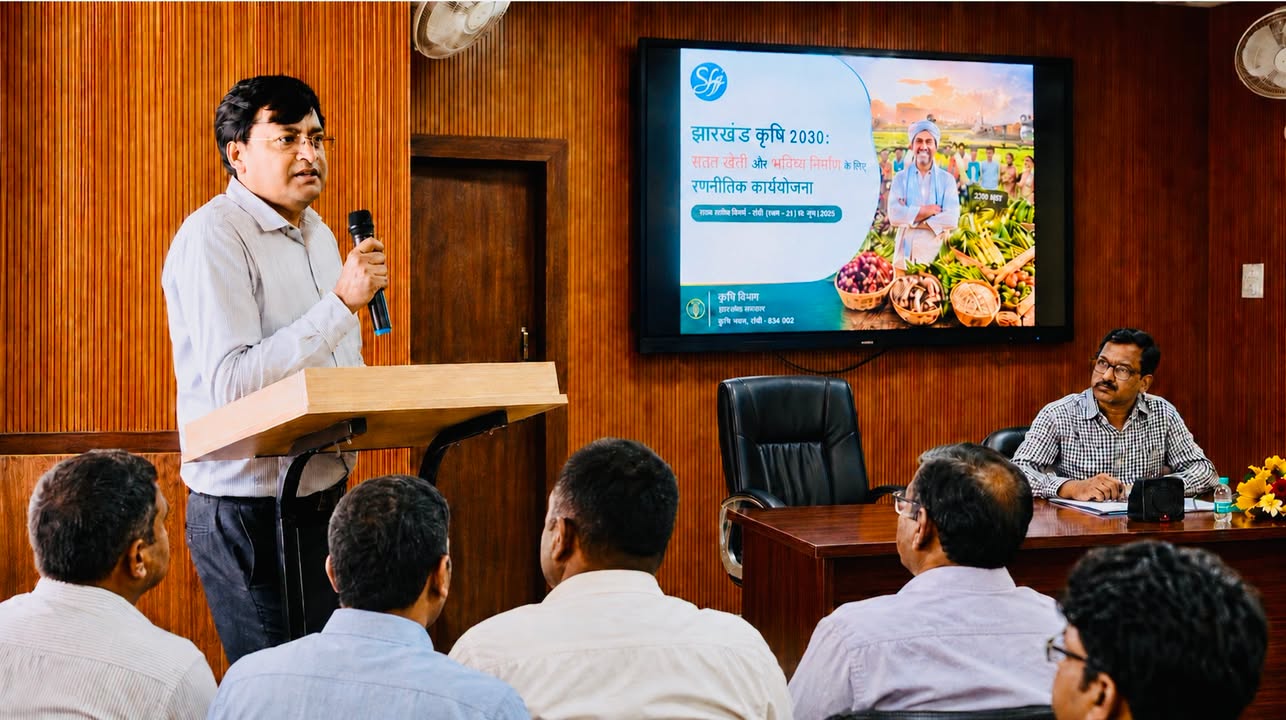
“Jharkhand’s farmers have the potential to reach global markets. Our task is to connect quality production with processing, certification, strong FPOs and reliable market linkages.” — Rajeev Singh
FPOs as the Backbone of Agricultural Export Growth
Mr. Rajeev Singh highlighted the central role of Farmer Producer Organisations in creating an export-oriented agricultural ecosystem.
FPOs can help small and marginal farmers aggregate produce, maintain quality standards, undertake grading and processing, and negotiate directly with institutional buyers, processors and exporters.
A stronger FPO ecosystem can reduce dependence on intermediaries, improve price realisation and create better market access for farmers.
District-Specific Export Strategy
A major recommendation of the roadmap was to identify the agricultural strengths of each district and prepare a separate export and marketing strategy for key products.
The proposed value-chain approach includes:
Production → Aggregation → Grading → Processing → Packaging → Storage → Certification → Market Linkage → Export
Such a structured system can help Jharkhand move from commodity-based agriculture towards higher-value and market-driven agricultural development.
Strengthening Infrastructure for Export
Mr. Singh stressed the need to build essential infrastructure closer to production areas, including:
- Cold-chain facilities
- Primary processing centres
- Pack houses
- Sorting and grading units
- Quality testing laboratories
- Scientific storage systems
- Export-compliant packaging
- Traceability systems
- Efficient logistics networks
These facilities can reduce post-harvest losses while improving product quality and farmer income.
Role of APEDA
The participation of APEDA was significant in helping farmers and FPOs better understand export procedures, international quality standards, certification, documentation, packaging requirements and global market expectations.
Mr. Singh underlined that farmers entering export markets need not only better production practices, but also knowledge of compliance, consistency and supply-chain management.
Technology and Digital Market Linkages
Sansar Green considers technology and digital market connectivity essential for the future of agricultural exports.
Digital platforms can connect FPOs with buyers, processors, institutional markets and exporters while providing better access to information on market demand, prices, quality specifications and procurement opportunities.
This can help farmers and producer organisations make more informed and market-oriented decisions.
Building a Strong Jharkhand Agricultural Identity
Mr. Rajeev Singh emphasised that Jharkhand has the potential to build a distinct agricultural identity based on its unique products, origin and quality.
With systematic branding, certification, processing and packaging, products from Jharkhand can gain stronger recognition in both national and international markets.
The long-term objective of the Jharkhand Agriculture Export Roadmap 2030 is to create a stronger ecosystem where farmers, FPOs, government institutions, processors, exporters and market partners work together.
For Sansar Green, the opportunity to jointly inaugurate the workshop and present this roadmap before FPO representatives from across Jharkhand marked an important milestone in its journey towards farmer empowerment, market linkage, agricultural innovation and rural entrepreneurship.
From Jharkhand’s farms to national and global markets — building stronger value chains, stronger FPOs and better opportunities for farmers.