
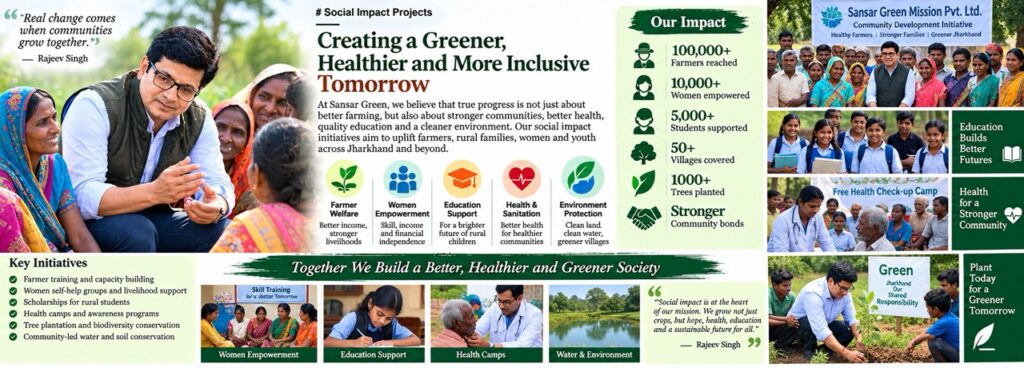
Ecology and human dignity cannot be separated. When degraded land heals, rural livelihoods stabilize, public health improves, and local communities gain genuine self-reliance.
Our social initiatives focus on bridging systemic divides across eastern India—turning environmental restoration into direct economic and social security for those who need it most.
Key Focus Areas
-
Livelihood Networks for Women’s SHGs: Developing village-level decentralized nursery systems. Women-led Self-Help Groups receive hands-on training, native germplasm, and operational support to raise multi-tier saplings for regional plantation drives, establishing an independent, recurring revenue stream.
-
Preserving Indigenous Knowledge & Rural Health: Archiving ancestral tribal healing traditions and ethnobotanical practices before they vanish. We pair this documentation with the creation of village-level Arogya Vana (medicinal forest pockets) and biodiverse nutrition gardens to directly combat rural malnutrition.
-
Community-Led Ecological Assets: Restoring village commons, mine-adjacent degraded tracts, and silted water bodies through high-density native afforestation and desilting drives. Every project is maintained and owned by the community to protect groundwater reserves and common grazing grounds.
-
Youth Agritech & Skill Development: Training rural youth in practical soil diagnostics, bio-input production, and modern micro-irrigation management. Building village-level technical capacity creates skilled green jobs and reverses distress migration.
How We Work
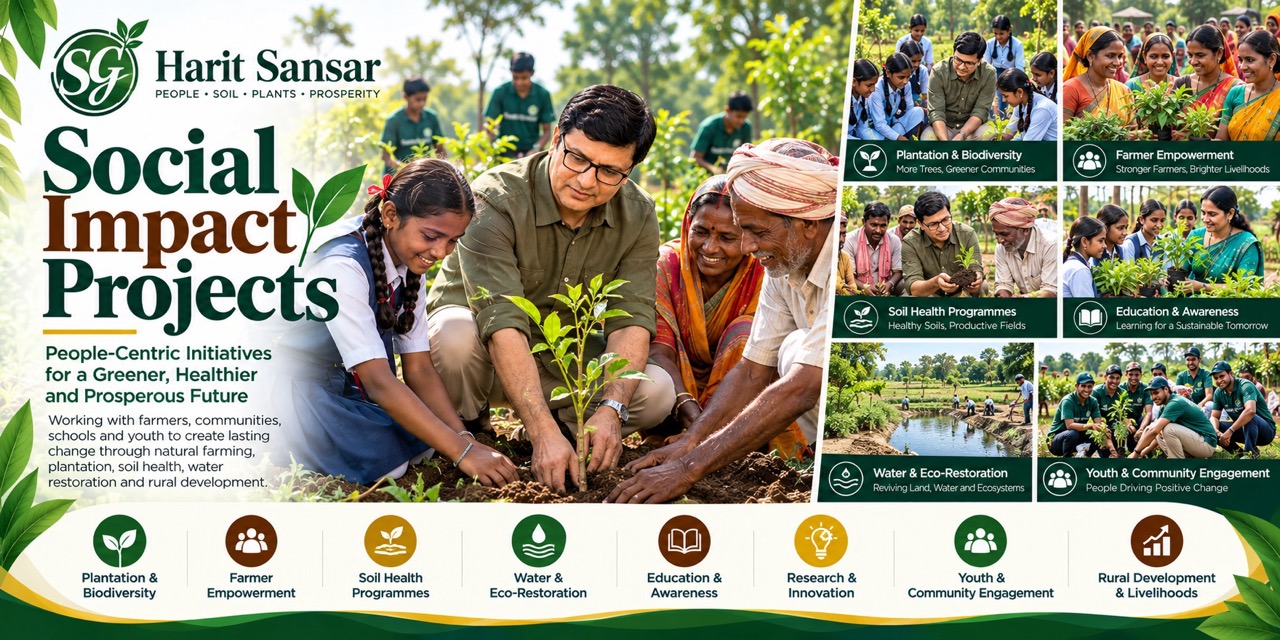
Healthier Communities, Greener Environment, Brighter Future through initiatives that empower farmers and support rural communities.
Sustainable Ownership
Every social intervention follows a clear lifecycle: assessment, community mobilization, skill transfer, and complete local handover. We do not build permanent dependencies; we build self-sufficient community institutions capable of stewarding their own natural resources and economic futures.