
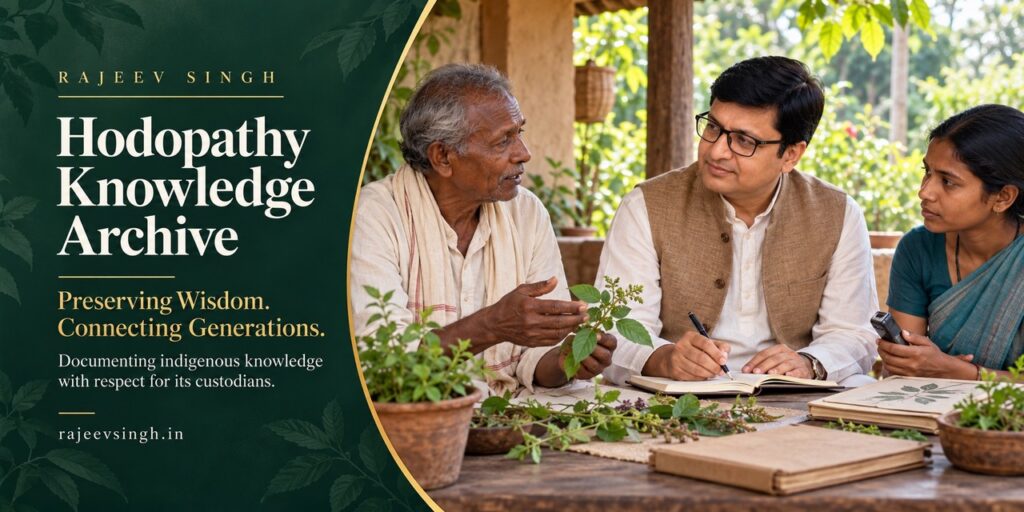
Indigenous Wisdom & Ethnomedicinal Heritage
In the heartlands of Jharkhand and the Chota Nagpur plateau, the forest is not merely a collection of timber or biomass; it is a living pharmacy, a cultural sanctuary, and an ancestral heritage. For millennia, indigenous communities—including the Santhal, Munda, Ho, Oraon, and Birhor tribes—have relied on Hodopathy (traditional tribal medicine) to heal their communities, manage chronic ailments, and maintain physical resilience.
As deforestation, rapid modernization, and rural migration accelerate, this priceless oral tradition faces severe risk of extinction. When an indigenous elder passes away without an apprentice, an entire library of ethnobotanical knowledge disappears with them.
The Hodopathy Knowledge Archive serves as an ethical, scientific repository dedicated to documenting, archiving, and scientifically validating indigenous medicinal plant knowledge, ensuring this ancestral heritage is preserved, respected, and protected for future generations.
What is Hodopathy?
The term Hodo originates from the indigenous Austroasiatic language family (specifically Santhali), meaning “human being” or “man.” Hence, Hodopathy translates literally to “the medicinal system of humankind.”
Unlike industrialized synthetic medicine, Hodopathy is grounded in a holistic relationship between people and their natural environment:
-
Symptomatic and Root-Cause Healing: Utilizing wild roots, barks, tubers, leaves, and whole plants to restore equilibrium to bodily systems.
-
Symbiotic Harvest Ethics: Strict traditional codes of collection that forbid destructive harvesting, ensuring only mature roots or select bark sections are gathered to allow the mother tree to regenerate.
-
Seasonal Synchronization: Formulations tailored to local agro-climatic rhythms and physiological transitions across changing seasons.
The Four Pillars of the Archive
To bridge the gap between traditional forest wisdom and modern botanical science without falling into exploitation, our archiving initiative operates along four strict dimensions:
┌────────────────────────────────────────────────────────┐
│               Hodopathy Archive Pillars                │
└──────────────────────────┬─────────────────────────────┘
         ┌─────────────────┼─────────────────┐
         ▼                 ▼                 ▼
[ Field Documentation ] [ Ethnobotanical Lab ] [ Conservation Groves ]
         │                 │                 │
         └─────────────────┼─────────────────┘
                           ▼
              [ Intellectual Property Ethics ]
-
1. Rigorous Oral Documentation: Systematic recording of medicinal preparations through in-depth field interviews with village healers (Rarhanik and Ojha/Kaviraj), cross-referencing indigenous terminology with standard binomial taxonomy.
-
2. Scientific & Phytochemical Validation: Partnering with academic departments and bio-research institutes to study active phyto-compounds, antimicrobial properties, and antioxidant profiles of documented plants.
-
3. In-Situ & Ex-Situ Conservation (Arogya Vana): Creating community-managed medicinal plant pockets within village commons and sacred groves (Jaherthan), safeguarding endangered species from extinction.
-
4. People-First Intellectual Property Ethics: Upholding strict ethical boundaries under the Nagoya Protocol on Access and Benefit Sharing (ABS). The knowledge belongs fundamentally to the indigenous communities that preserved it; our role is protection and documentation, strictly barring unauthorized commercial exploitation.
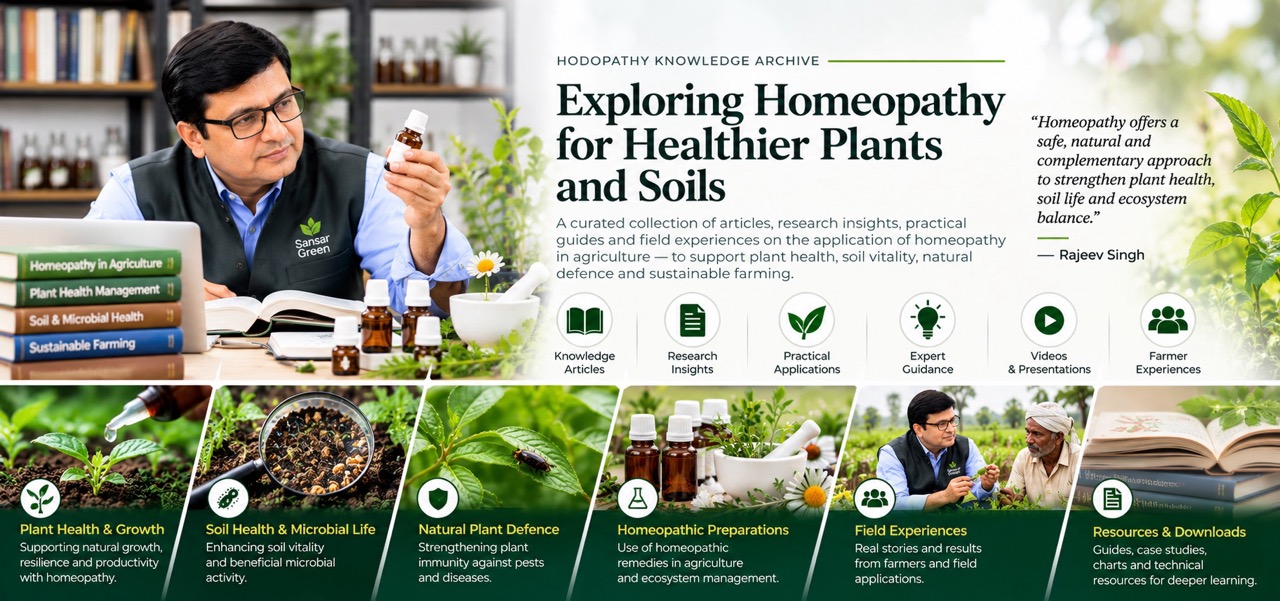
Offering a safe, natural, and complementary approach to strengthen plant health, soil life, and ecosystem balance.
Featured Ethnobotanical Profiles
Here is a view into the vital plant species documented in the regional Chota Nagpur repository:
| Indigenous / Local Name | Botanical Classification | Plant Part Utilized | Traditional Application | Conservation Status |
| Satawar(Kurthi) | Asparagus racemosus | Tuberous Roots | General vitality, restorative tonic, and lactogenic support | Vulnerable in wild tracts |
| Bhui-Neem(Kalmegh) | Andrographis paniculata | Whole aerial herb | Bitter tonic for liver disorders, seasonal fevers, and digestion | Common / Overharvested |
| Hadod(Harjora) | Cissus quadrangularis | Succulent Stems | Accelerating bone fracture healing and joint inflammation relief | Depleted in rocky scrubs |
| Anantamool(Dudhi) | Hemidesmus indicus | Roots | Blood purification, skin conditions, and internal cooling | Vulnerable due to root-digging |
| Karanj | Pongamia pinnata | Seed oil, Bark decoction | Antifungal skin applications, pest repelling, and rheumatic aches | Abundant / High-Value |
| Chirchita(Apamarga) | Achyranthes aspera | Seeds, Leaf extract | Dental care, renal stone management, and wound healing | Abundant |
Field Archival Methodology
Every entry incorporated into the Hodopathy repository undergoes a transparent, respectful verification lifecycle:
Ethical Charter & Intellectual Property Protection
The commercial exploitation of tribal knowledge without attribution, consent, or shared benefit represents a direct continuation of historical resource extraction.
The Hodopathy Knowledge Archive is governed by strict ethical principles:
-
No Commercial Patenting: Data collected under this initiative is indexed to create prior art, preventing biopiracy and the unauthorized commercial patenting of indigenous formulations by third parties.
-
Open Community Access: Village elders, local youth, and primary care workers maintain free access to all field guides and conservation manuals derived from the repository.
-
Benefit-Sharing Commitment: Any institutional or clinical development originating from these studies must include clear benefit-sharing mechanisms directed to the custodian communities.
Research Collaboration & Contributions
The Hodopathy Knowledge Archive actively collaborates with ethnobotanists, Ayurvedic researchers, university departments, and tribal research institutes to expand scientific inquiry into indigenous medicinal flora.
Researchers seeking scholarly collaboration, herbarium access, or field study coordination can submit a formal research proposal through the collaboration gateway.